

MICHAEL HANSON


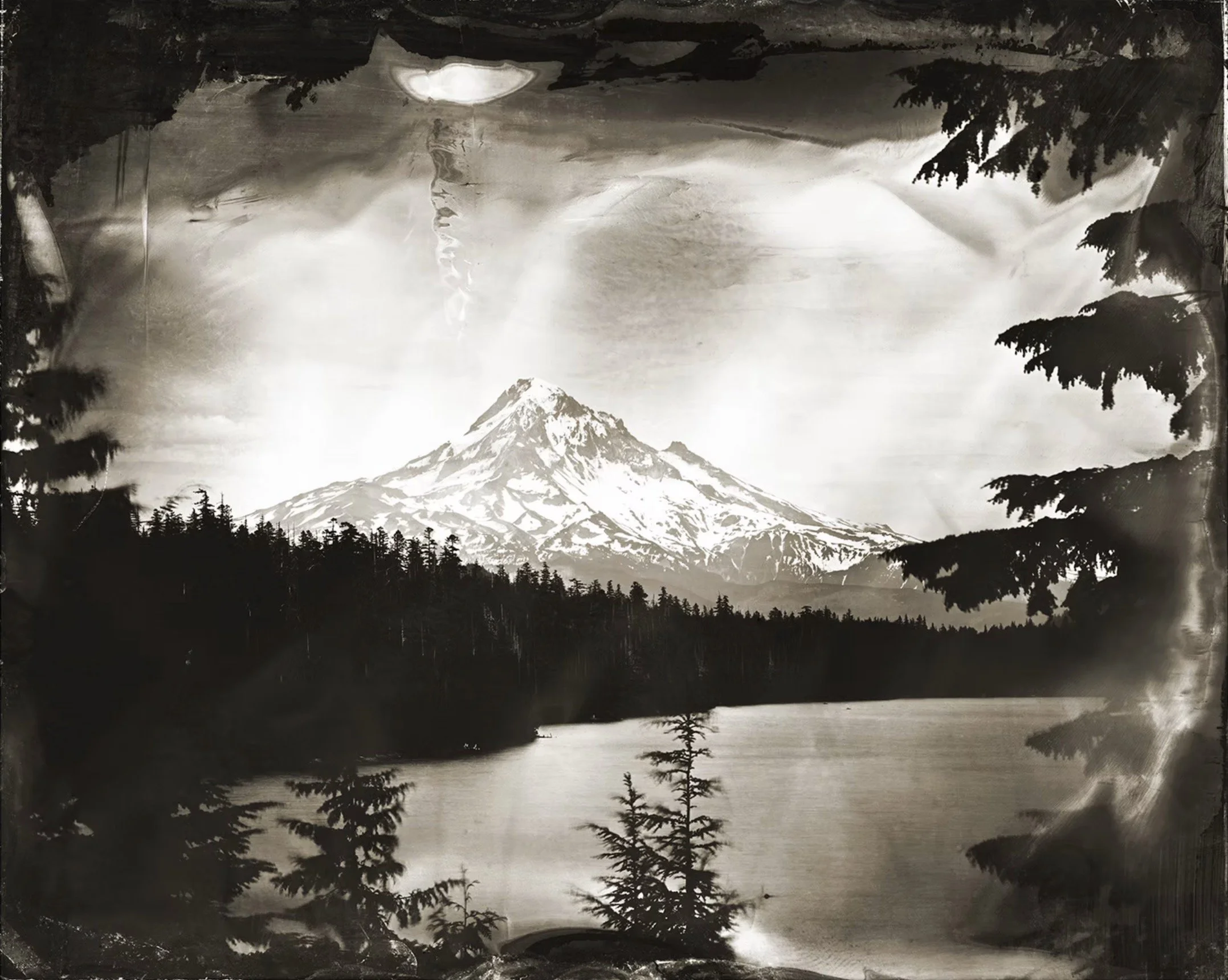
INSPIRATION AND PROCESS: The wet plate process was the main form of photography through the 1800s and early 1900s. It begins by adding a layer of collodion to a plate of glass and then submersing that coated glass into a silver nitrate mix, causing the plate to become light sensitive. While under a red light, the glass plate is put into a film holder. I use an old 4x5 field camera to expose the plate. Returning to my makeshift darkroom in the back of my truck, I develop the plate and fix it, allowing the plate to be removed from the darkroom.
I don’t know why things happen the way they do but the results feel magical.
LIFE AS A GORGE ARTIST. I began to explore my own method of documenting my home. How can a river be so complex?
The same waters that carry remnants of our flushed and buried mistakes also provide refuge for a species that, despite many hurdles, continues to fight to return home. A series of falls where salmon surrendered to waiting nets now rests at the bottom of a dark pool. A world of past and present collisions in a complicated scene where perhaps the British historian was only half right. The South is not the only American landscape that has suffered the weight of defeat. Tangled, unpredictable images appear on a plate of glass under the red light of my headlamp.
The Columbia River’s appeal stems not just from its beauty, but also from the intricate dance of time and societal influences, which persistently mold its ever-changing legacy.